


Lack of selenium increases your risk of viral infections
– and could even make them more dangerous
 Selenium is of vital importance to a strong immune defense. Still, selenium deficiency is a common problem and it increases the risk of viral infections such as influenza and the coronavirus from China, which is feared to turn into a global pandemic. It is a problem that selenium deficiency in infected animals and humans causes the virus to mutate and become more aggressive. Because of selenium’s important role as a powerful antioxidant, being deficient of this micronutrient may leave the body vulnerable to oxidative stress, which can cause tissue damage and complicate the virus infection. It is therefore important to get enough selenium at all times, as it also increases our resistance towards other viral infections such as herpes, HIV, and hepatitis, according to an article published in Nutrients.
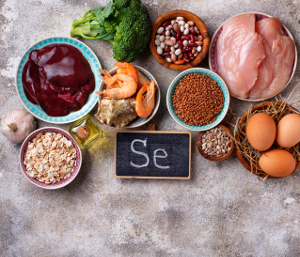 Lack of selenium, an essential trace element, may cause thyroid disorders, cardiovascular disease, virus infections, AIDS, infertility, neurological disturbances, and cancer. An estimated one billion people worldwide are selenium-deficient. This is mainly a result of nutrient-depleted soil, which is a real problem in places like Europe. For decades, scientists have been warning about this problem, and a lot suggests that we need more than the officially recommended intake to protect ourselves effectively against disease, according to a review article published in StatPearls.
 The mitochondria are the powerhouses of our cells that churn out energy in a process that involves oxygen, Q10, selenium, and other nutrients. Around 100 years ago, the German Nobel Prize winner, Professor Otto Warburg, demonstrated that even if cancer can be caused by a number of secondary factors, there is only one primary cause: alterations in the mitochondrial oxygen turnover. In his recent book, Tripping over the Truth, molecular biologist Travis Christoffersen describes how contemporary scientists confirm Warburg’s theories and says that we need to look at prevention and cancer treatment from an entirely different angle. Other studies show that Parkinson’s disease, migraine, senility, chronic fatigue, fibromyalgia, epilepsy, and other neurological disorders may be rooted in defects of the mitochondria that have many other functions besides delivering energy. It is therefore vital to take care of the mitochondria throughout life. You can read more about the ketogenic diet that optimizes mitochondrial energy turnover in different mitochondrial diseases.
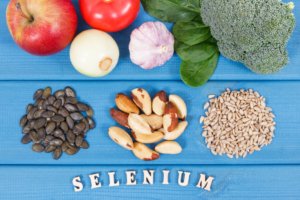 Selenium is a trace element that supports over 30 essential selenoproteins, which have numerous functions. For the first time ever, a study of Mexican children reveals that lack of selenium delays the growth of pubic hairs and the development of sex organs in boys. It is a known fact that the agricultural soil in Mexico is low in selenium and that affects the entire food chain. The same is the case in Europe, for which reason farmers for decades have supplemented livestock with selenium as a way of improving fertility and preventing a number of deficiency problems. The big question is to what extent can selenium deficiency problems explain the impaired sperm quality that has been observed among young men? An estimated 500 million to one billon people worldwide get too little selenium from their diet.
 Infertility affects around one in seven couples. WHO considers it a global health problem. One of the leading causes is impaired semen quality, and Danish, Norwegian, and German men have lower sperm quality than any other male populations. Impaired sperm quality may be a result of an unhealthy lifestyle with stress, tobacco, stimulants, and hormone-disrupting compounds. On the other hand, scientists from Mexico have found that supplements of zinc, selenium, Q10, and omega-3 have an effect on the number of sperm cells and their quality. Other studies show that zinc and selenium protect sperm cells and are important for testosterone levels.
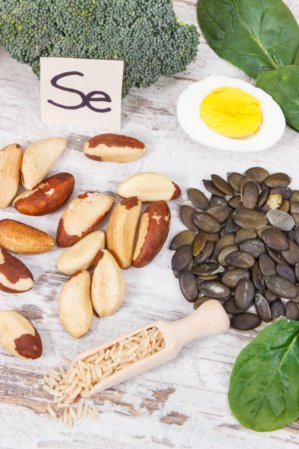 Selenium is an essential trace element that is important for the immune defense, metabolism, fertility, nervous system, and cancer prevention. An estimated one billion people worldwide are believed to be selenium-deficient. Because European agricultural soil is low in selenium, we Europeans are more exposed than others. It appears that selenium deficiencies increase our risk of many acute, chronic, and life-threatening diseases, and the official recommendations for daily intake are too low, according to a new article about selenium deficiency, which is published in the scientific American database NCBI (National Center for Biotechnology Information).
 People, who eat nutrient-depleted diets, have an increased risk of contracting cancer, according to a French study that is published in PLoS Medicine. The scientists therefore recommend labeling food to help consumers make healthier choices. In the Nordic countries, we already have the “Keyhole label” on certain healthy food items, but even if you follow the official dietary guidelines, it may be difficult to get enough vitamin D and selenium, both of which are nutrients with several anti-cancer mechanisms.
 Perhaps so. More and more studies reveal that it helps to take large quantities of Q10 and a vitamin B3 derivate. Q10 and vitamin B3 are both essential for the body’s energy turnover, which takes place inside the mitochondria of the cells. A more recent study shows that taking supplements of the mentioned nutrients can also have a positive effect on the heart, which is the body’s central motor.
 Earlier studies have found a link between low selenium and overweight, but only few and limited studies have investigated this connection in children. Therefore, Chinese researchers wanted to take a closer look, and selenium levels in nail clippings give a rather accurate picture of the body’s general selenium status. Selenium deficiency is common in many parts of the world, including parts of China and Europe.